Showing posts with label species. Show all posts

Thursday, April 19, 2012

How many carnivorous plants exist?


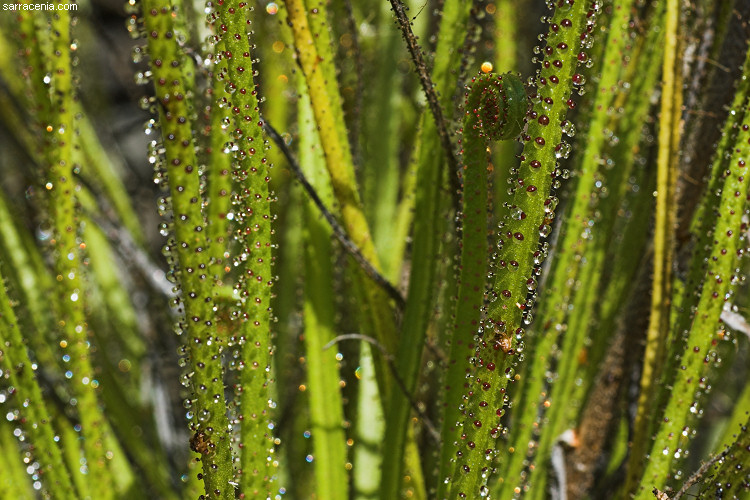
  • Drosophyllum
    Drosophyllum lusitanicum
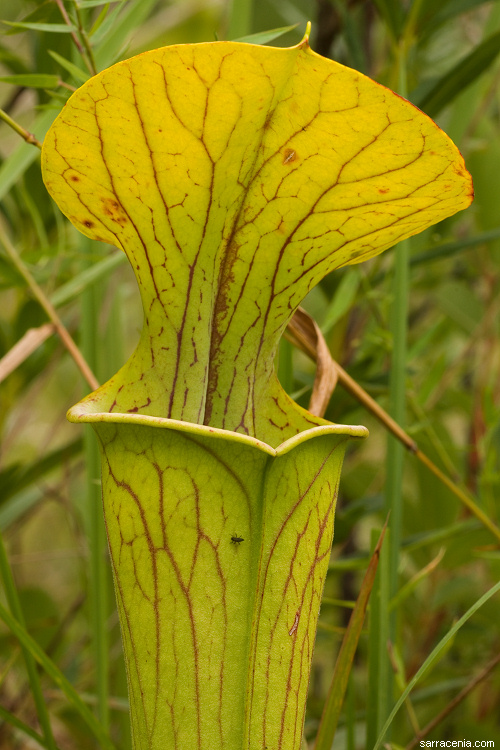
  • Sarracenia oreophilaSarracenia oreophila
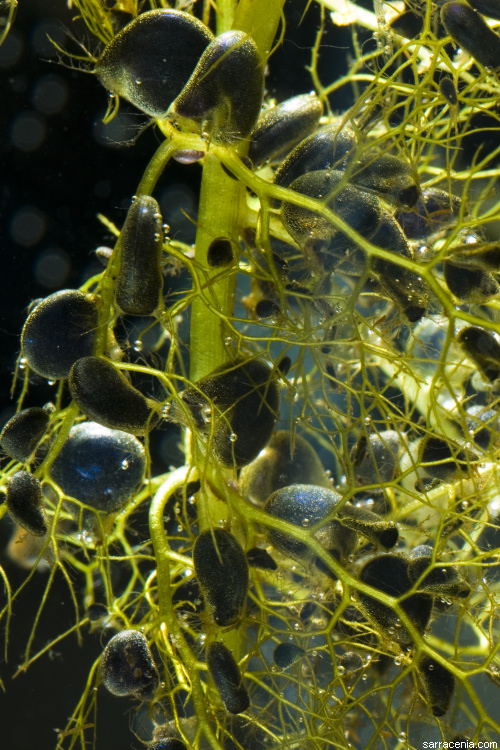
  • Utricularia macrorhizaUtricularia macrorhiza
The famous Venus flytrap is only one of many species of carnivorous plants. More than 670 species and subspecies of carnivorous plants have been described (although humans have caused some to become extinct). The genus with the largest number of species (over two hundred) is Utricularia, but many other genera exist and this FAQ discusses them all. I have prepared a taxonomical breakdown of all the different carnivorous genera, sorted by botanical Order and Family. This page is my most updated set of species listings, so you can count the number of carnivorous plants yourself. Looking at it you will see that many plants are carnivorous!

Wednesday, June 23, 2010

Plant of the day - Pinguicula Primuliflora

Perennial herb. The leaves are in basal rosettes that are 4-16 cm broad. The leaves are bright green, oblong, rounded at the tip, 6-9 cm long, 2.0-2.5 cm wide, and covered with short, knob-tipped (sticky and glandular) hairs. The flowers are solitary on leafless stalks (scapes) that become 8-15 cm tall, and have scattered, short, knob-tipped hairs. The flowers are bilaterally symmetrical with the calyx 2-lipped, the upper lip with three distinct lobes and the lower lip with two smaller lobes (see persistent calyx around fruit in illustration). The corolla consists of an expanded portion that is 2.5-3.0 cm wide with five nearly equal lobes that are obovate to nearly round, 8-13 mm long, 10-14 mm wide, and shallowly notched; a narrow tube that is 4-5 mm long; and a narrow, basal, downward extension or spur that is 3-5 mm long. The corolla tube and spur are lemon yellow with prominent brownish-violet veins; the ground color of the expanded portion of the corolla varies from deep to pale bluish-violet with darker veins, with a ring of white at the throat and a mass of yellowish, sometimes reddish-tipped, club-shaped hairs at the center. Some of these hairs, besides occurring along the inner throat, are found on an appendage (palate) that projects obliquely some 3-5 mm from the lower, inner surface of the corolla tube. The two stamens are white; the single ovary has a white style with two unequal lobes. The fruit is a rounded capsule, 5 mm in diameter, with numerous seeds. The seeds are brown, small (0.5-0.7 mm long), somewhat broadened at one end, and honeycomb-surfaced.

Monday, June 21, 2010

Plant of the day - Nepenthes Truncata


Nepenthes truncata (pronounced /nɨˈpɛnθiːz trʌŋˈkɑːtə/, from Latin: truncatus = terminating abruptly) is a carnivorous pitcher plant species endemic to the island of Mindanao in the Philippines. The species grows at an elevation of 0–1500 m above sea level.[1] Nepenthes truncata is characterised by its heart-shaped (truncate) leaves and very large pitchers, which can reach up to 40 cm in height.