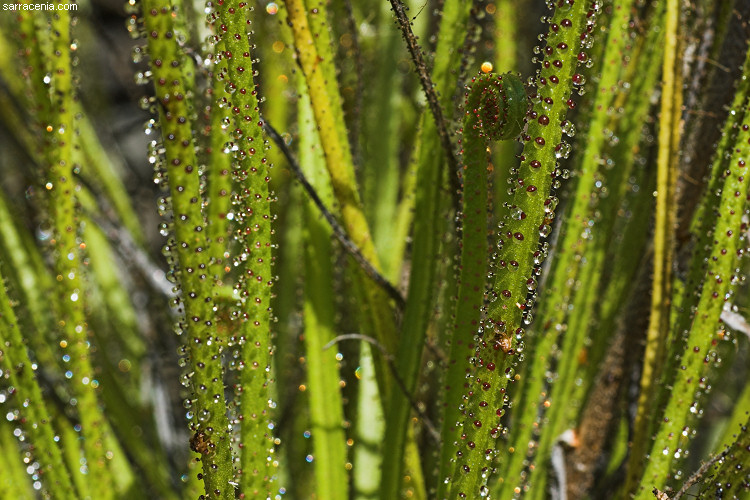
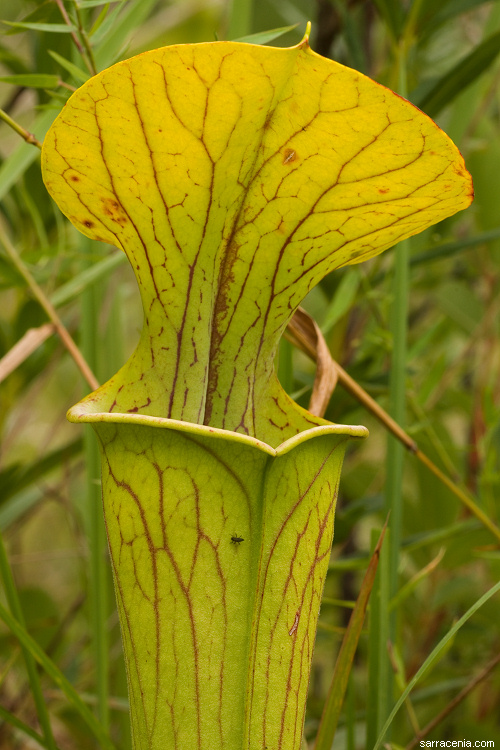
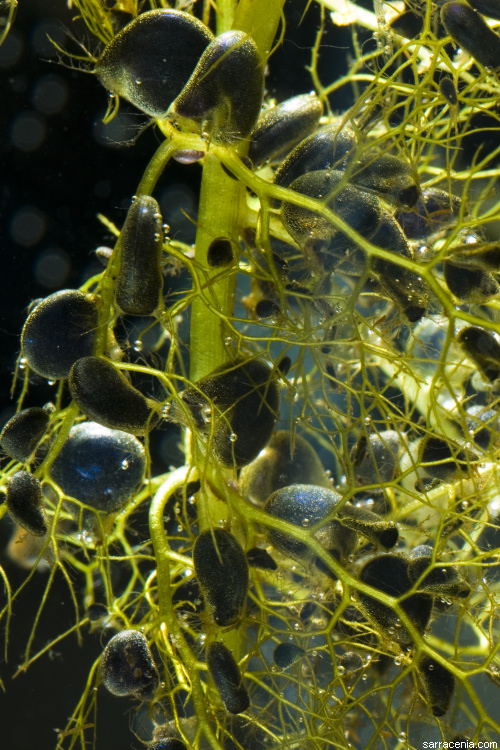
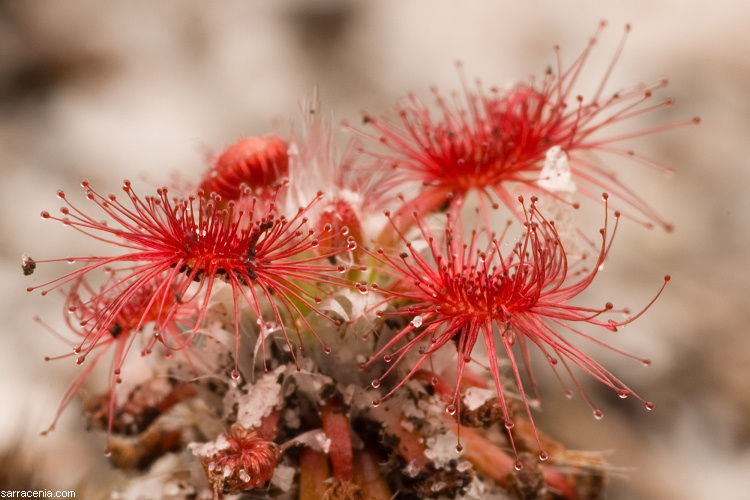
Drosera roseana
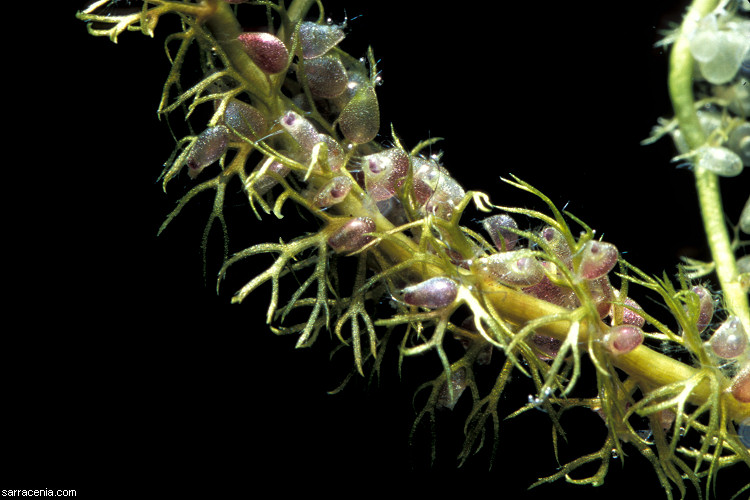
 Utricularia macrorhiza
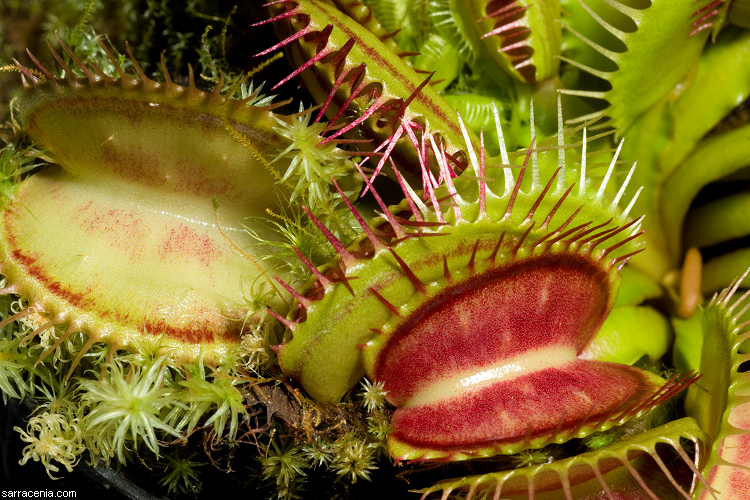
 Dionaea muscipula
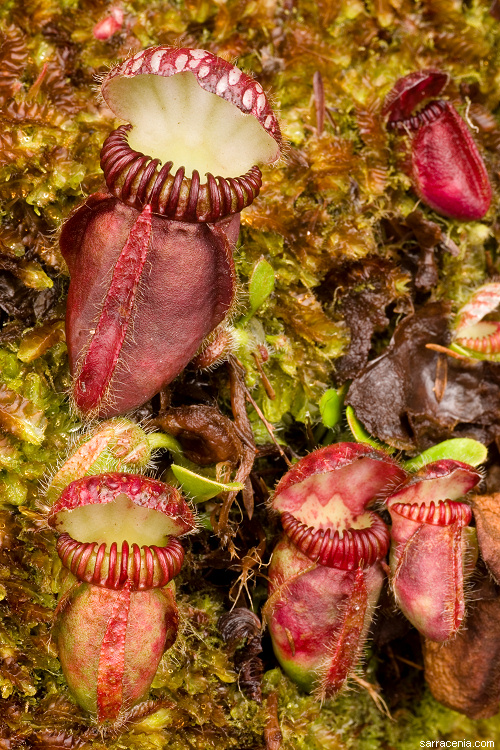
 Cephalotus
This is the first requirement of the three-part definition of a carnivorous plant. In its full detail, the requirement is (in somewhat technical language):
The plant must have clear adaptations to capture prey. Such adaptations may include specialized structures like trapping leaves, and/or enhancements to improve the luring and capture of prey, such as extrafloral nectaries, attractive UV or pigmentation patterns, odors, hairs that guide prey, etc.
There are two parts to this. First, the plant must have a trapping mechanism. There are five different trap types that carnivorous plants have.
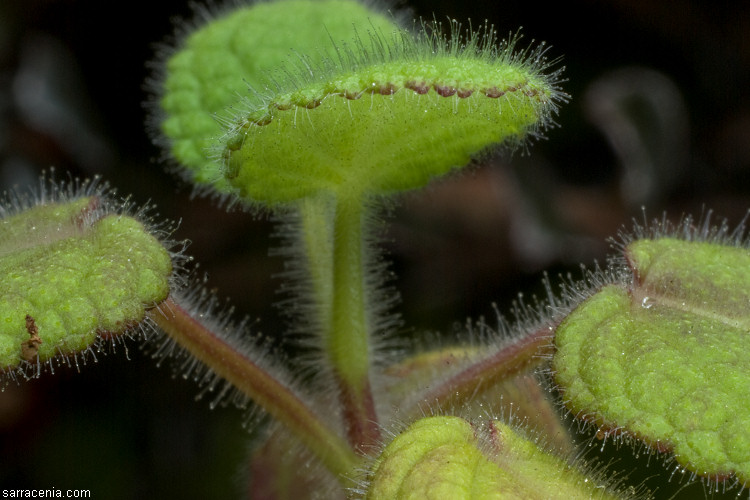
 A sticky Salvia
Is it carnivorous?
- Pitfall traps--such as pitcher plants like Cephalotus;
- Sticky traps--such as the sundew genus Drosera;
- Lobster pot traps--such as the marvelous Genlisea;
- Suction traps--the only genus that does this is Utricularia;
- Snap traps--for example, the famous snapping leaves of Dionaea.
The second part of this attribute is that the simple trap type mentioned above might have modifications that improve its efficiency. I'll mention some as I describe the trap types later in the FAQ, but to whet your appetite I'll mention examples:
- Plants might produce nectar as a lure;
- Plants might produce an attractive smell;
- The trap may have visual appeal--this may only be visible in UV;
- The surface of the trap might be particularly slippery or waxy;
- Hairs may be present that point prey to the point of no return;
- Special trap windows may let light in, but not allow escape--this can disorient prey;
- Trap fluids may be particularly sticky or viscous.
The importance of this attribute is that it is the basic method by which prey are captured so the plant can get on with the next stage---digestion!
Drosophyllum lusitanicum
Sarracenia oreophila
Utricularia macrorhiza