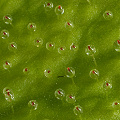
 Drosera schizandra
glands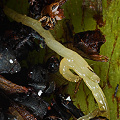 Metriocnemus
in Darlingtonia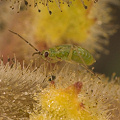 Cyrtopeltis
on Ibicella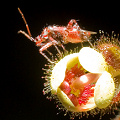 Setocoris
on Stylidium
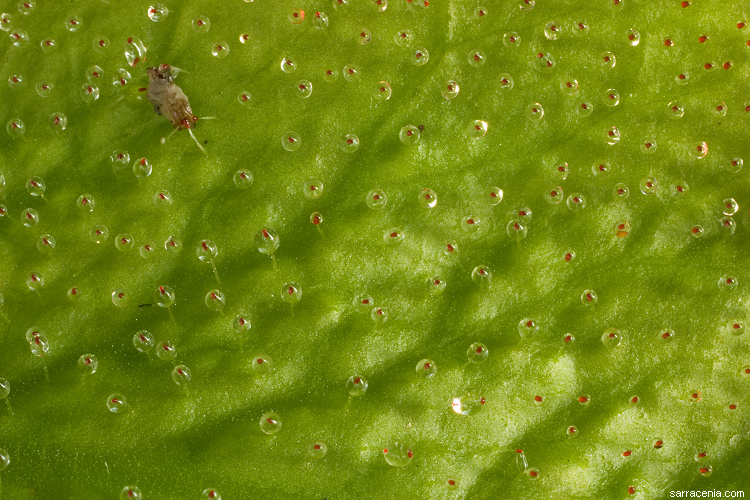
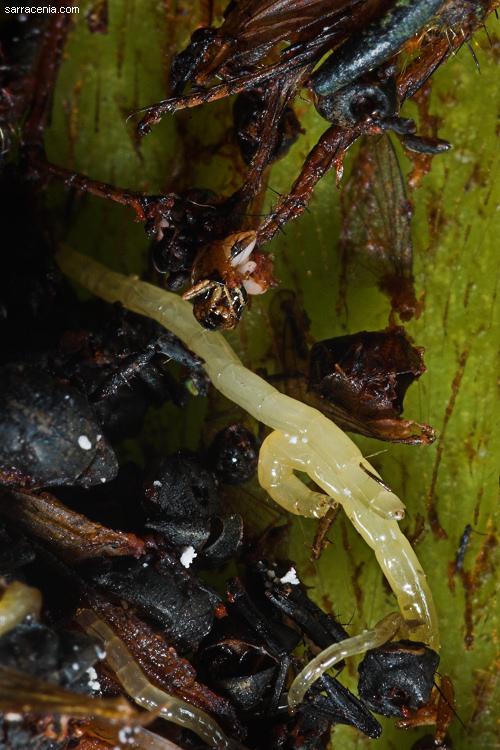
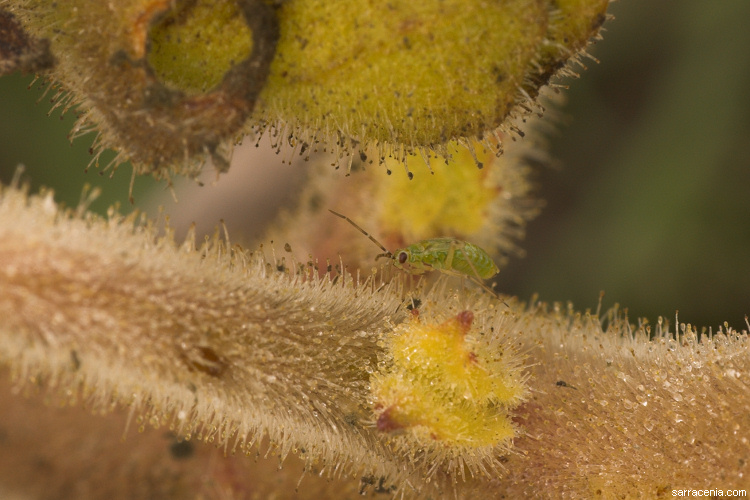
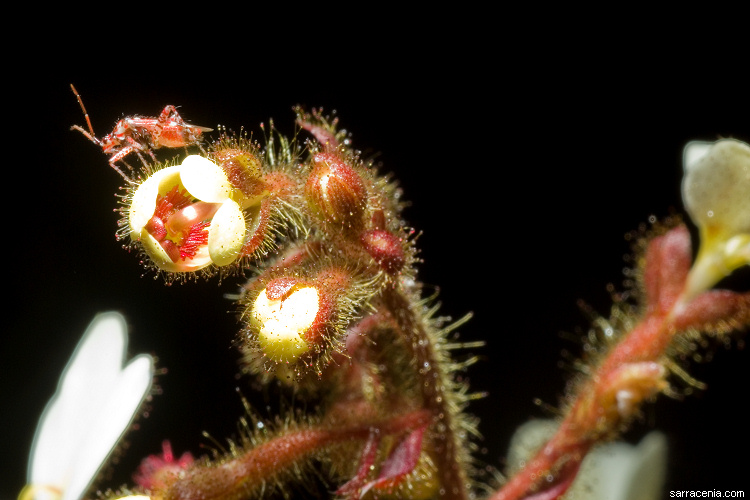
Now we move to the second part of the three-part definition of a carnivorous plant:
A mechanism is present by which prey are degraded into a form that can be assimilated by the plant. The digestive mechanism may be enzymes produced by the plant, decomposition by bacterial activity, or other organisms in a mutualist relationship with the plant (i.e., arthropods as in the cases of Darlingtonia andRoridula).
All this means is that once the prey is captured, the prey must be digested into raw nutrients that the plant can absorb into its tissues. If you think of the trapping attribute as the plant's mouth, the digestion attribute is rather like the functions of a stomach. There are three ways that digestion can be performed:
- The plant may produce its own digestive enzymes.
- The plant may have internal parts that are populated with bacteria, mites, larval insects, etc. This is universal for all pitcher plants, even those that produce their own enzymes. Analogous to bacteria in the human gut, these organisms digest the prey for the plant.
- The plant may have external surfaces upon which live organisms such as predatory/scavenging hemipteran bugs that digest the prey, then produce excrement that can be absorbed by the plant.
You should be a little careful when looking at plants with predatory bugs crawling around on their surface. Every now and then a carnivorous plant enthusiast will report on some possible "new carnivorous plant," and will cite as evidence the fact that they saw a hemipteran crawling on it. Beware! Hemipterans crawl around on a lot of surfaces and sticky plants--that doesn't make the plant carnivorous. It is crucial that the plant has clear adaptations by which it can absorb the nutrients from the hemipteran. If the excrement from the bug just rolls off and goes into the soil to be lost, that ain't carnivory!


