Dedicated carnivorous plant nurseries are the best places to buy carnivorous plants, especially for the beginner or beginning-intermediate grower that is not too picky about looking for impossible-to-find species. Purchases can also be made via eBay, although I suggest you be cautious in such purchases.
The web sites listed below are for carnivorous plant nurseries. I am a stickler for making sure that nurseries I deal with are not involved in field collection. So in order for any online nursery to be listed on this FAQ, they must agree with the following disclaimer:
"The material I sell is propagated by me or suppliers who develop stock by tissue culture. Any field collection I do is legal, and is to develop breeding or propagation stock only. I do not sell plants or seeds that have been collected by me or my contacts to fill plant orders."
The nurseries on this page agreed with the above conservation statement. I applaud their conservation ethic and encourage you to do business with them. They are listed in alphabetical order by nursery name. When seeking plants, do not forget the benefits of joining The International Carnivorous Plant Society or the various other carnivorous plant societies. Most of these societies have seedbanks or trading parties.
For clarification, I do not patrol the web, looking for nurseries to include on this listing. If you run a nursery and agree with the conservation statement on this page, send me your data using the same format that I have below, and I will include you. It may take a few weeks for me to upload your data, so please be patient. If you have a listing, but your nursery information changes, it is your responsibility to supply updated information to me. If I encounter a nursery with a broken link I will remove it from the list. I despise dead links, and do not have time to track you down. If you notice your nursery has been removed, just contact me with the new information and I will reinstate you!
While presented in association with the International Carnivorous Plant Society, this FAQ is maintained by me (Barry Rice). As such, I do not have to be entirely impartial. Indeed, my favorite nursery listed on this page is California Carnivores, run by Peter D'Amato--master horticulturist and acclaimed author. If you are in the USA and are looking for plants, I encourage you to start there. Peter has been a longtime supporter of the ICPS. You can buy from him in safety.
Best Carnivorous Plants (Czech Republic)
E-mail: cp(at)bestcarnivorousplants.com
WWW: http://www.bestcarnivorousplants.com
Comments: An extraordinary inventory of all kinds of carnivorous plants and seeds. Will ship internationally. Plants grown from seed and tissue culture.
Borneo Exotics (Sri Lanka)
E-mail: borneo(at)lanka.net
WWW: http://www.borneoexotics.com
Comments: Nepenthes. Grown from from seed, this new firm is now exporting worldwide. At present you can look at the 300+ photographs at its web site.
Botanique (USA)
E-mail: kbailey(at)mail.rlc.net
WWW: http://www.pitcherplant.com
Comments: Sales only within the continental USA. Sarracenia, Nepenthes, Drosera, and others.
Brutala Blommor (Sweden)
E-mail: brutalablommor(at)@hotmail.com
WWW: http://brutalablommor.se
Comments: Nepenthes, Sarracenia, Cephalotus, Drosera, Pinguicula, Utricularia, Dionaea, Heliamphora. Tillandsia, and many more strange plants & equipment.
Bug Biting Plants (USA)
WWW: http://www.bugbitingplants.com
Comments: Wholesale only. Carrying Venus flytraps, sundews, cobra lilies, pitcher plants, and others.
California Carnivores (USA)
E-mail: califcarn(at)aol.com
WWW: http://www.californiacarnivores.com
Comments: Nepenthes, Sarracenia, Cephalotus, Drosera, Pinguicula, Utricularia, Dionaea, Heliamphora. Author of The Savage Garden, this source is highly recommended by the FAQ-lords.
Carnivorous Plant Nursery (USA)
E-mail: info(at)carnivorousplantnursery.com
WWW: http://www.carnivorousplantnursery.com
Comments: We provide a complete line of low-cost, high-quality carnivorous plants from around the world, as well as teaching materials for carnivorous plants. All of our plants are nursery propagated from seeds, cuttings, divisions and tissue culture.
Cascade Carnivores (USA)
E-mail: support(at)cascadecarnivores.com
WWW: http://www.cascadecarnivores.com
Comments: Online sales of dewy pines, american and tropical pitcher plants, Venus flytraps and sundews, butterworts and bladderworts. We never field collect our nursery stock. Our plants are all seed grown, propagated by division and cuttings, or grown from tissue culture. USA sales only.
Cooks Carnivorous Plants (USA)
E-mail: cooks(at)flytraps.com
WWW: http://www.flytraps.com/
Comments: Dionaea, Drosera, Sarracenia, Nepenthes, Utricularia, Pinguicula. Will ship internationally.
The CP Jungle (USA)
E-mail: cpjungle(at)aol.com
WWW: http://www.cpjungle.com
Comments: A large selection of Nepenthes, as well as many flytrap forms and Sarracenia. Has permits to ship CITES Appendix I plants, such as Sarracenia alabamensis, S. oreophila, and Sarracenia rubra subsp. jonesii.
Dangerous Plants (USA)
E-mail: thayes(at)dangerousplants.com
WWW: http://www.dangerousplants.com
Comments: A large selection of Nepenthes, Drosera & Sarracenia as well as flytrap forms, Pinguicula, Heliamphora, Cephalotus and Utricularia.
Drosera Gemmae (USA)
E-mail: droseragemmae(at)yahoo.com
WWW: http://www.droseragemmae.com
Comments: We specialize in pygmy Drosera. We have a big selection of plants and gemmae to choose from at lower prices.
Exotica Plants/Andrea and Geoff Mansell (Australia)
E-mail: exotica(at)isisol.com.au
WWW: http://www.exoticaplants.com.au
Comments: Extensive range of Nepenthes (species and hybrids) for worldwide wholesale/retail.
Flora Laboratories (Australia)
E-mail: andre(at)alphalink.com.au
WWW: http://www.alphalink.com.au/~andre
Comments: Carnivorous plant tissue culture service in Melbourne, Australia. Also supply carnivorous plants in-vitro, Keikigrow plant hormone pastes and laboratory supplies.
Hewitt-Cooper Carnivorous Plants (UK)
E-mail: nigel(at)hccarnivorousplants.co.uk
WWW: http://www.hccarnivorousplants.co.uk
Comments: Established 10 years, our range of nursery grown plants continues to increase. We supply Dionaea, Drosera, Drosophyllum seed, Pinguicula, Sarracenia, Utricularia, and sundries. Plants can be sent throughout Europe.
Houston Herpetological Supply (USA)
E-mail: info(at)houstonherp.com
WWW: http://www.houstonherp.com
Comments: Retail sales of Dionaea (Venus flytraps), Drosera (sundews), Nepenthes (tropical pitcher plants), Pinguicula (butterworts), and Sarracenia (North American pitcher plants)--all produced by tissue culture, seeds or division - via mail order/phone order. US sales only. Wholesale prices available on larger quantities.
insektenfang plants (UK)
E-mail: enquiries(at)insektenfang.com
WWW: http://www.insektenfang.com
Comments: I maintain one of the largest and most diverse Sarracenia and Dionaea collections in the country, along with substantial representation of most other carnivorous genera.
Keehns Carnivores (Canada)
E-mail: rkconcepts(at)telus.net
WWW: http://www.keehnscarnivores.ca
Comments: "in vitro"and traditional propagation of carnivorous plants. Sales to Canada. Dionaea, Drosera, Sarracenia, Nepenthes.
Malesiana Tropicals (Borneo)
E-mail: malesiana(at)tropicals.com.my
WWW: http://www.malesiana.com/html/home.htm
Comments: Retail/wholesale nursery in Borneo specializing in Nepenthes, orchids, palms, ferns, aroids, and other exotic plants.
Meadowview Biological Research Station (USA)
E-mail: meadowview(at)pitcherplant.org
WWW: http://www.pitcherplant.org
Comments: Plant sales fund restoration and research work. Dionaea, Drosera, Utricularia, Sarracenia hybrids and Sarracenia anthocyanin-free hybrids and species. Sarracenia species and regional restoration requests (e.g. Texas S. alata, S. rubra subsp. jonesiiand S. rubra alabamensis. Aldrovanda. Cephalotus. Plant sales only in USA. Specially bred Sarracenia seed.
The Nepenthes Nursery/Andreas Wistuba (Germany)
E-mail: andreas(at)wistuba.com
WWW: http://www.wistuba.com
Comments: Nepenthes, Heliamphora, Pinguicula, Cephalotus worldwide except Australia and New Zealand.
PetFlytrap (Texas, USA)
E-mail: orders(at)petflytrap.com
WWW: http://www.petflytrap.com
Comments: Primarily sells Dionaea (Venus flytraps) via mail order/phone order. Also sells other carnivorous plants, including sundews, butterworts, Sarracenia, and Nepenthes.
Predatory Plants (USA)
E-mail: info(at)predatoryplants.com
WWW: http://www.predatoryplants.com
Comments: We stock a wide selection of sundews, butterworts, Sarracenia, Nepenthes and many other plants. We ship bare-root and potted plants to anywhere in the United States.
Sarracenia Northwest Carnivorous Plants (USA)
E-mail: jeff(at)cobraplant.com
WWW: http://www.cobraplant.com
Comments: We promote the growing of Sarracenia species and Venus flytraps outdoors. We also provide a free monthly reminder on how to care for your plants all year round.
Shropshire Sarracenias (UK)
E-mail: mike(at)carnivorousplants.uk.com
WWW: http://www.carnivorousplants.uk.com
Comments: Specialising in Sarracenia species forms, named locations and hybrids (around 1,000 different clones) along with a wide range of Dionaea, I can deliver within the EU or worldwide with the appropriate CITES permits. All plants from divided stock or rhizome cuttings.
Southern Carnivores (Australia)
E-mail: phillmann(at)scarnivores.com
WWW: http://www.scarnivores.com
Comments: Nepenthes, Cephalotus, Drosera. Plants grown from seed and tissue culture. Specializing in Nepenthes and Nepenthes hybrids.
Triffid Nurseries (UK)
E-mail: andy(at)triffidnurseries.co.uk
WWW: http://www.triffidnurseries.co.uk/
Comments: Nepenthes, Sarracenia, Drosera, VFTs, Pings, Utrics, Heliamphora and Cephalotus. Plants shipped throughout Europe. Extensive CP Seed List shipped worldwide.
Triffid Park (Australia)
E-mail: triffids(at)triffidpark.com.au
WWW: http://www.triffidpark.com.au
Comments: Hundreds of species, books, etc. A very large supplier.
Tristan's Carnivorous Plants (USA)
E-mail: tristanscps(at)hotmail.com
WWW: http://www.tristanscps.com/
Comments: Specializing in Nepenthes and Sarracenia. All plants have been propagated by Tristan's Carnivorous Plants.
World of Carnivores (USA)
E-mail: sales(at)world-of-carnivores.com
WWW: http://www.world-of-carnivores.com/
Comments: Carnivorous Plant Sales & Supplies along with Care/Propagation/Tissue Culture Guides. Complete with a family oriented Forum to post questions or just chat with other CP enthusiasts.
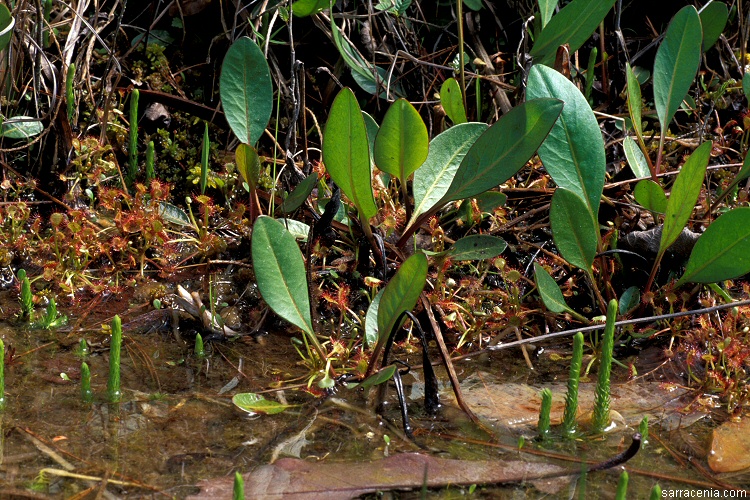
 Drosera roseana
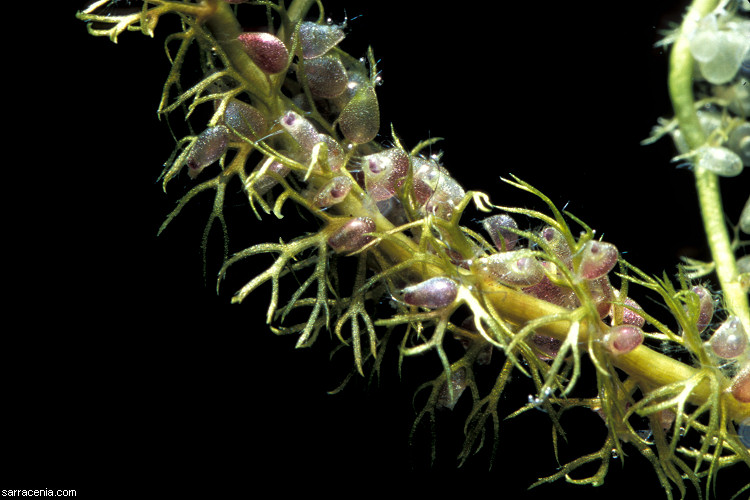
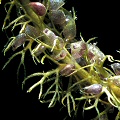 Utricularia macrorhiza
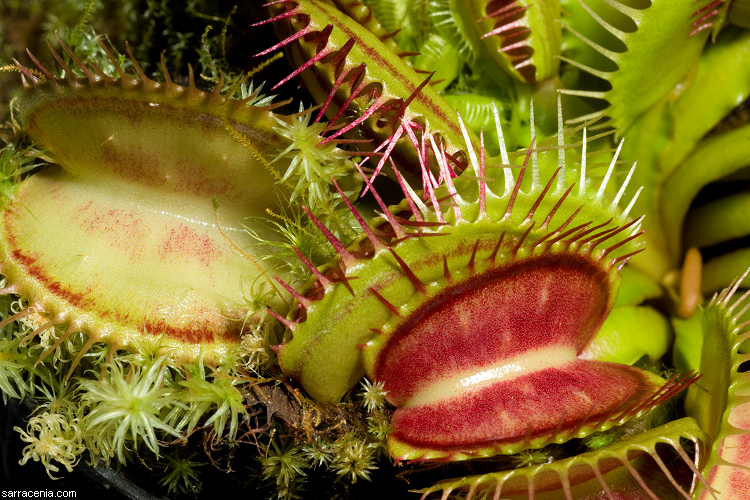
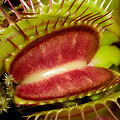 Dionaea muscipula
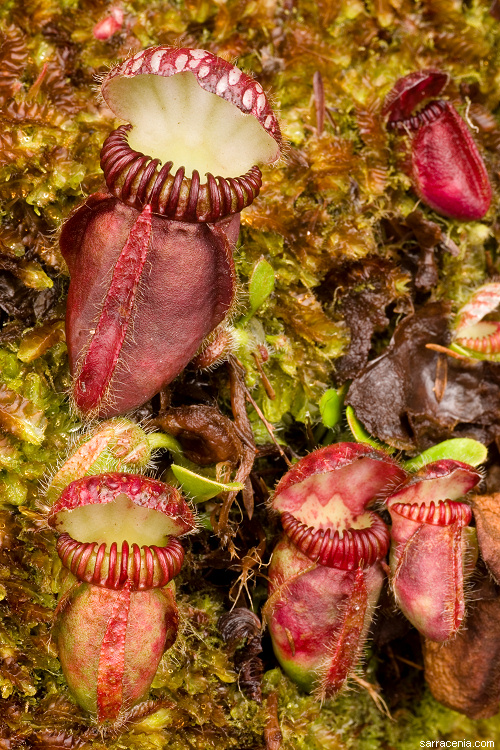
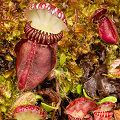 Cephalotus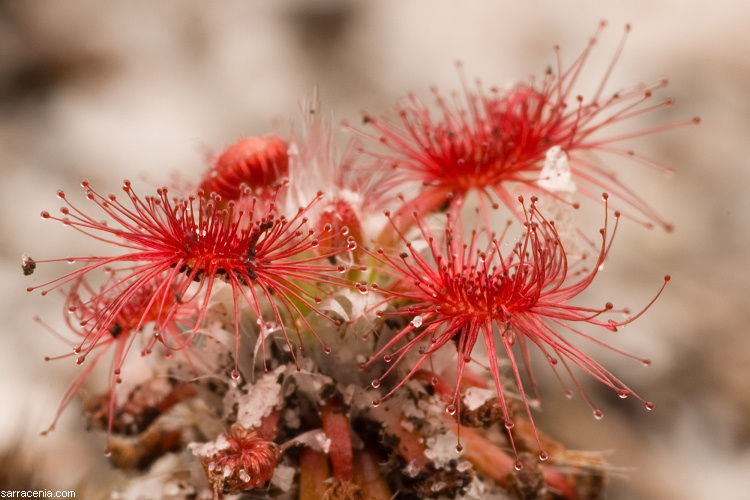
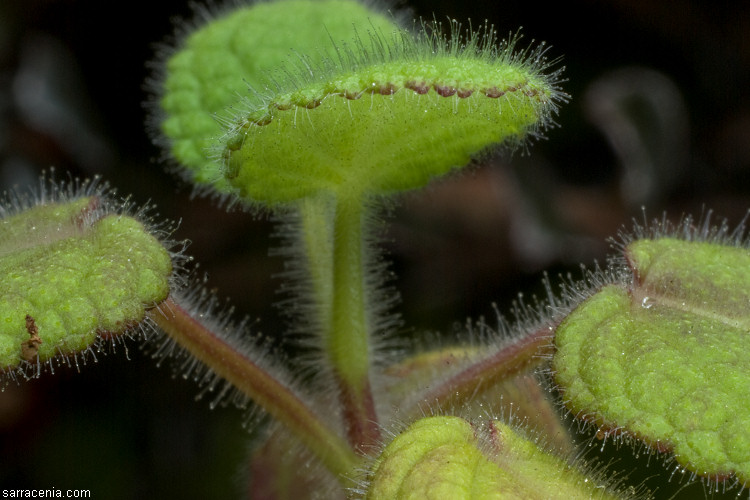
 A sticky Salvia